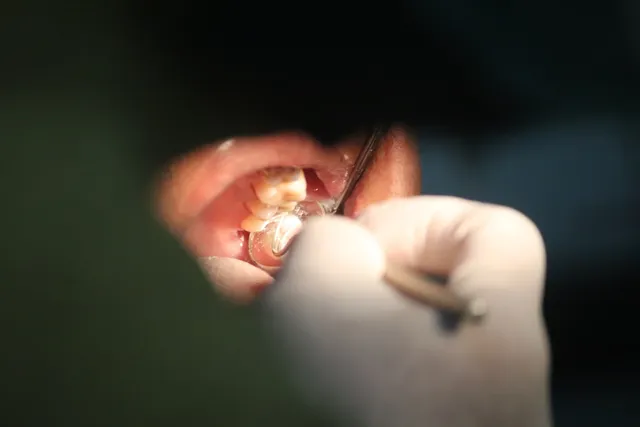
Every week, I have a version of this conversation. A patient comes in with a painful tooth — maybe an infection, maybe a fracture — and after I explain what’s happening, they ask the question: “Should we save it, or should we just pull it?”
It’s a reasonable question. I’ve been asked it more times than I can count. And my answer is always the same: let me show you exactly what I’m looking at and walk you through the factors that determine the right decision. There’s no universal answer, but there is a clear framework.
Here’s how I actually think through this.
The Default Position: Save the Tooth
Before we get into the exceptions, I want to establish the baseline: saving a natural tooth is almost always the preferred outcome, when it’s clinically viable.
Why? Because your natural tooth is a sophisticated structure that no replacement can fully replicate. The periodontal ligament — the thin tissue connecting the root to the jawbone — acts as a shock absorber, provides sensory feedback, and actively maintains the bone around the root. When a tooth is extracted, the bone that surrounded the root starts to resorb. That process begins within weeks and continues over years, changing the shape of your jaw and making future tooth replacement more complicated.
An implant is an excellent substitute. A bridge works. But neither replaces your natural tooth — they replace the function of your natural tooth. If we can save the tooth, we should.
That said, sometimes the tooth can’t be saved. And in those cases, extraction is clearly the right decision. Let me explain how to tell the difference.
When a Root Canal Is the Right Choice
A root canal treats disease inside the tooth — infection, dying nerve tissue, pulp inflammation — without removing the tooth. We clean out the pulp chamber and root canals, disinfect them thoroughly, fill them with a biocompatible material, and seal the tooth. Then we place a crown to protect the now-brittle structure.
A root canal is the right call when:
The tooth can be restored. For a root canal to make sense, there needs to be enough healthy tooth structure above the gumline to support a crown. If there is, we can make the tooth fully functional again.
The roots are intact. Vertical root fractures — cracks that run lengthwise down the root — can’t be fixed by a root canal. But if the roots are sound, a root canal addresses the problem.
There’s adequate bone support. If the bone around the tooth is healthy or only mildly affected by the infection, the tooth has a solid foundation to remain in place after treatment.
The infection is contained. If the infection is inside the tooth and around the root tip, a root canal can eliminate it. If you’re experiencing the signs of a tooth infection — persistent pain, sensitivity to heat, swelling near the tooth, or pain when biting — a root canal is typically the appropriate treatment.
The patient wants to keep the tooth. This matters. Some patients, for personal or financial reasons, prefer to save a tooth even when extraction and implant might be a viable alternative. Others would rather move forward with extraction if the prognosis for the root canal is uncertain. I respect that. My job is to give you honest information; the decision is yours.
When Extraction Is the Right Choice
There are specific situations where I tell patients clearly: this tooth needs to come out. Here’s what I’m looking for:
Vertical Root Fracture
This is the most definitive reason to extract. A vertical fracture — a crack running lengthwise down the root — creates an entry point for bacteria that can’t be sealed from inside the canal. Root canals treat the inside of the tooth; they can’t repair a fractured root.
These fractures are often subtle on x-rays, and sometimes I don’t confirm them until I’m in the tooth and can see the fracture directly. When I see it, I stop and have a frank conversation with the patient: we need to take this tooth out.
Severe Bone Loss
The tooth exists in a socket of bone. If the infection or periodontal disease has destroyed a significant portion of that bone, the tooth doesn’t have adequate support to remain stable — even if the root canal itself is successful. Extracting the tooth and allowing the area to heal is the more predictable path.
A Tooth That Can’t Be Restored
For a root canal to make sense, there has to be enough healthy tooth structure to work with above the gumline. If decay has destroyed the crown of the tooth to the point where there’s nothing meaningful to build on, a root canal would be treating the root of a tooth that can’t function. Extraction is the more honest answer.
Failed Previous Root Canal With Poor Retreatment Prognosis
Root canals have a success rate above 95%, but a small percentage fail — the infection returns, the seal breaks down, or an accessory canal was missed in the original treatment. In some cases, the tooth can be retreated. In others — particularly when retreatment has already been attempted, when the anatomy is highly complex, or when the surrounding bone is significantly compromised — extraction is the more predictable long-term solution.
The Tooth Is a Structural Liability
Occasionally I see teeth that have been so heavily restored over the years — multiple fillings, a crown, a previous root canal — that saving the tooth would require significant investment for an uncertain outcome. When I factor in the patient’s overall oral health, the cost of treatment, and the realistic prognosis, extraction and implant placement might offer a more reliable long-term result than trying to salvage a tooth that has been through a lot.
The Financial Comparison
I want to be transparent about this because I know cost is a real factor for most patients.
Root canal + crown: In Huntington Beach, a molar root canal runs approximately $1,000–$1,800. A zirconia crown adds $1,200–$1,800. Total: roughly $2,200–$3,600 before insurance. Our Huntington Beach root canal cost guide explains the main price variables in more detail.
Extraction + implant: Extraction itself is typically $200–$400. A dental implant (implant post, abutment, and crown) runs $3,500–$5,500 in our area. If bone grafting is needed to address loss from the extraction, add $500–$2,000 to that. Total: often $4,000–$6,000+.
Extraction + bridge: A three-unit bridge costs $3,000–$5,000, and it requires permanently altering the two teeth adjacent to the gap to serve as anchors.
Extraction + nothing: This is the cheapest short-term option and consistently the most expensive long-term one, as bone loss, shifting teeth, and bite changes create cascading problems over time.
In nearly every case where the tooth is restorable, saving it with a root canal and crown is less expensive than the extraction-and-replacement path. And the outcome — a natural tooth that functions like it always did — is generally superior.
Where this calculation can flip: if the prognosis for the root canal is poor (high likelihood of failure and retreatment), the cost of repeated treatment may eventually exceed the one-time cost of extraction and implant.
What the X-Ray Tells Me
Most of this decision comes down to what I see on the x-ray and what I find during the exam. Here’s what I’m evaluating:
Bone levels. The x-ray shows me how much bone surrounds each root. Significant bone loss changes the calculus.
Root anatomy. I can see the number of roots, their length, whether they’re curved, and whether the canals appear calcified. This helps me assess the complexity of the root canal and whether a specialist would be better suited for it.
Extent of decay or previous restoration. I can see how much tooth structure remains and whether there’s enough to work with.
Root fracture signs. Vertical fractures are notoriously difficult to see on x-rays, but there are indirect signs — a halo of bone loss around a root, or a very specific pattern of symptoms — that raise suspicion before I even look inside.
Periapical pathology. The dark shadow at the root tip that indicates infection — called a periapical lesion — tells me how far the infection has progressed.
Sometimes I need to look inside the tooth to confirm my suspicion before I can tell you definitively which direction we’re going. That’s just the reality of dentistry: the x-ray gives me a strong preview, but the exam tells the full story.
My Honest Take
Here’s how I frame this for every patient: I’m not advocating for the treatment that makes me more money. Root canals and crowns generate more revenue than extractions. I’m advocating for what gives you the best long-term outcome.
If I can save your tooth with a root canal that has a good prognosis, that’s what I’m going to recommend. If the tooth is compromised beyond what root canal therapy can address, I’m going to tell you clearly that extraction is the right call — and then we’ll talk about how to replace it.
I’ve been building this practice on referrals and relationships for 20 years. The only way that works is if patients trust that I’m giving them straight information. When I recommend a root canal, it’s because the tooth can be saved and it’s worth saving. When I recommend extraction, it’s because the situation is genuinely beyond repair.
If you’re unsure whether your tooth falls into one category or the other, the answer is simple: let me look at it. An x-ray and exam will give us both the information we need to make the right decision together.
Frequently Asked Questions
If I get an extraction, do I have to replace the tooth right away?
No, but I’d encourage you not to wait too long. Bone loss from an extraction site begins within weeks. The longer you wait to place an implant or bridge, the more bone has resorbed — which may require a bone graft before implant placement and adds complexity and cost. For most back teeth, I recommend having a replacement plan in place before extraction happens.
Can a tooth that needed extraction eventually be a candidate for an implant?
In most cases, yes. Once the extraction site has healed — typically 3–6 months — we evaluate whether there’s adequate bone for an implant. If there isn’t, a bone graft can be performed first. Even teeth with significant infection can usually be replaced with an implant after adequate healing time.
How do I know if my root canal has failed?
Signs that a previously treated tooth may have failed include: returning pain, swelling near the tooth, a new gum pimple (fistula) near the root, or a new dark shadow on x-ray at the root tip. If you have any of these, come in. In some cases retreatment can save the tooth; in others, extraction is more appropriate.
Does a root canal weaken the tooth permanently?
Yes — removing the pulp makes the tooth more brittle, which is why a crown is recommended afterward. But a root-canal-treated tooth with a properly fitted crown can function normally and last a lifetime. “Weakened” doesn’t mean “compromised” as long as it’s properly restored.
I’ve heard root canals fail — is it really worth it?
The success rate for root canal treatment is above 95% at ten years when the case is appropriate and the tooth is properly restored with a crown. The cases that fail tend to involve teeth that weren’t ideal candidates to begin with, or teeth where the crown was never placed or was poorly fitting. When I recommend a root canal, it’s because I believe the tooth has a good prognosis.
Not sure whether your tooth is worth saving? Dr. Tran can evaluate your tooth and give you a straight, honest recommendation — no pressure either way. Call Peninsula Dentistry in Huntington Beach at (714) 374-8800 or book online.
Prices are typical ranges at Peninsula Dentistry & Orthodontics as of September 2026, before insurance. Your exact fee depends on the exam and is quoted in writing before treatment starts.