When a patient hears “bone graft” in connection with their dental implant, one of two things usually happens: they get anxious, or they nod and then go home and search to understand what that actually means. Usually both.
I have this conversation regularly at Peninsula Dentistry in Huntington Beach. Bone grafting sounds more dramatic than it actually is — and whether you even need one depends on factors a 3D scan can evaluate in minutes. Let me give you the honest picture.
For the complete overview of the dental implant process from start to finish, I’d start here: Dental Implants in Huntington Beach: What to Expect. This post focuses specifically on bone grafting — when it’s necessary, what it involves, and how it affects your timeline and cost.
Why Bone Quality Determines Implant Success
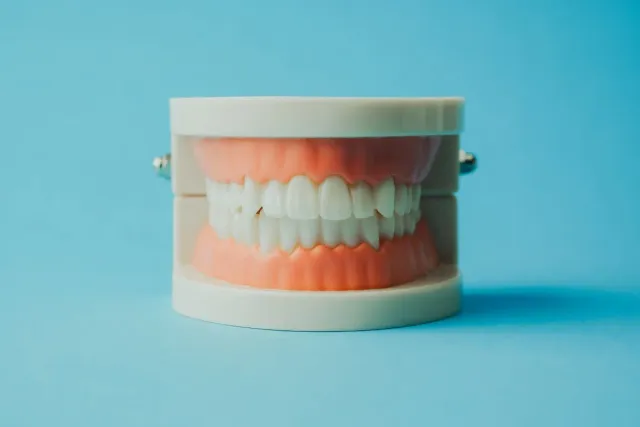
A dental implant is a titanium post placed surgically into your jawbone, where it fuses with the bone over several months through a process called osseointegration. For that fusion to succeed, there has to be enough bone to anchor into — enough volume, and enough density.
The problem is that jawbone doesn’t stay put after a tooth is lost. The moment a tooth comes out, the bone in that area starts to shrink. This isn’t a slow or abstract process. Studies show you can lose up to 25% of bone width in the first year after an extraction. Over several years, the loss can be significant enough that placing an implant directly into that site isn’t viable — there’s simply not enough solid bone to hold it.
This happens because of how bone responds to mechanical stimulation. Every time you chew, a natural tooth root transmits force into the surrounding bone, signaling the body to maintain it. Remove the tooth, remove the stimulation, and the body stops prioritizing that section of bone. It resorbs. This is also why people who have worn full dentures for many years often develop a characteristic “sunken” facial appearance — their jawbone has literally shrunk away.
Bone grafting rebuilds the foundation that a successful implant requires.
Who Actually Needs a Bone Graft?
Not everyone who wants an implant needs one. One of the primary goals at your first consultation is figuring out exactly where you fall.
You’re more likely to need a bone graft if:
- You’ve been missing a tooth for more than a year
- Your 3D scan shows insufficient bone volume or density at the planned implant site
- The tooth was extracted due to infection, which tends to accelerate bone loss around the site
- You have existing bone loss from periodontal (gum) disease
- The missing tooth was a molar — molar sites carry significant chewing load and often lose bone faster after extraction
- Prior dental work in the area involved bone removal
You may be able to skip the bone graft if:
- The tooth was recently extracted and bone hasn’t had time to shrink significantly
- I can place the implant at the same time as the extraction — called an “immediate implant” — which dramatically reduces post-extraction bone loss
- Your scan shows adequate bone height, width, and density at the site
- The missing tooth was a smaller front tooth in a naturally well-preserved area
When I sit down with a patient for a consultation, I pull up the 3D scan on the monitor and show them their bone directly. You can see exactly what you’re working with — not an educated guess, not a vague concern. That’s what the cone beam CT is for.
Types of Bone Grafts Used in Implant Cases
There’s more than one approach to bone grafting. The right choice depends on the size of the deficiency, your anatomy, and what’s most likely to produce solid, predictable results.
Autograft (your own bone): Bone taken from elsewhere in your mouth — typically the chin, the back of the jaw behind the last molar (the retromolar area), or the palate — and placed at the implant site. Living bone integrates predictably and is often considered the gold standard for larger grafts. The tradeoff is a second surgical site, which means a somewhat more involved procedure and recovery.
Allograft (donor bone): Processed bone from a screened human donor source. This is the most commonly used graft material in dental implant cases — the processing eliminates biological material, leaving a mineral scaffold that your own bone cells grow into. No second surgical site. For most moderate grafts, outcomes are comparable to autograft.
Xenograft (animal-derived bone mineral): Typically from bovine (cow) sources, processed so only the mineral matrix remains. The body accepts it well and it provides a reliable scaffold. Commonly used for socket preservation immediately after extractions.
Alloplast (synthetic): Biocompatible synthetic materials — various calcium phosphate compounds — that function similarly to xenograft. No human or animal donor material.
I choose the material based on the size and location of the deficiency and what I believe will give the most predictable integration. For most socket preservation and single-site grafts, allograft or xenograft works well. For larger reconstructions, I sometimes use combinations.
What the Bone Graft Procedure Involves
This is usually where patient anxiety lives, so I’ll be specific.
Before the procedure: Your consultation includes a detailed review of the 3D scan and a discussion of any factors that affect healing — certain medications, diabetes, smoking history, prior radiation to the jaw. You’ll have a complete cost breakdown and timeline before we schedule anything.
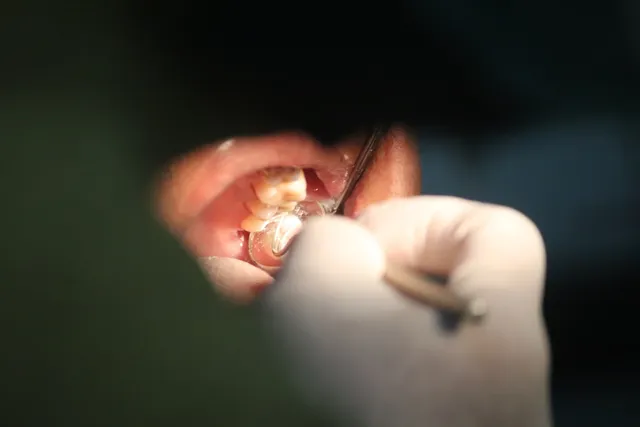
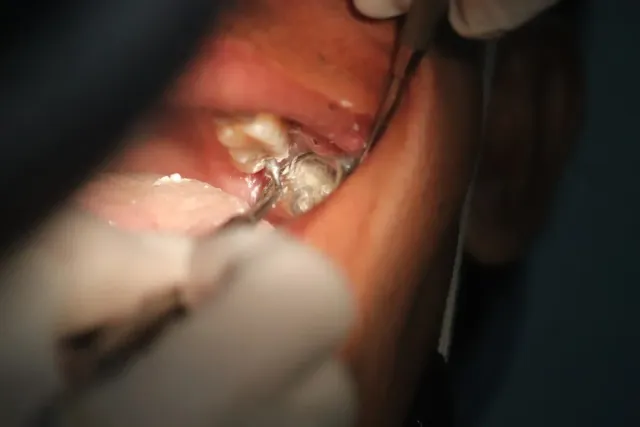
The procedure: Performed under local anesthesia. Sedation is available if you prefer to be relaxed. The area is fully numbed, a small incision is made in the gum tissue, the graft material is placed into the deficient area, and a collagen membrane is typically placed over the top. This membrane acts as a physical barrier that keeps the graft material in position while bone grows, and prevents gum tissue from filling the space before bone can form. The gum is then sutured closed.
Most bone graft procedures take 30 to 60 minutes, depending on the size and complexity. Patients regularly tell me afterward that it was far less involved than they’d imagined.
Recovery: Similar to the post-extraction experience. Mild soreness for 2–3 days, managed with over-the-counter ibuprofen. Swelling is normal and typically peaks at days 2–3. Soft diet for 1–2 weeks. A follow-up visit at 1–2 weeks to confirm the tissue is healing properly.
The waiting period: After the graft, the site needs 3 to 4 months to mature before the implant can be placed. The graft material gradually resorbs while your own bone cells replace it. At the end of that window, what started as a foreign scaffold is increasingly replaced by your own living bone. When I’m satisfied with maturation on a follow-up scan, implant placement proceeds as a standard case.
Socket Preservation: The Smart Move at Extraction Time
One of the most cost-effective decisions a patient can make is bone grafting at the time a tooth is extracted — called socket preservation.
When a tooth comes out, the socket starts to collapse immediately. Placing graft material into the socket right after the extraction dramatically slows or prevents bone loss in that area. The cost is modest — typically $300 – $800 — and it can eliminate the need for a larger, more expensive, and more time-consuming graft later.
If you know you want an implant eventually and a tooth needs to be removed now, I almost always recommend socket preservation. It’s far easier to maintain bone than to rebuild it after significant loss has occurred. A modest investment at extraction time can save you months of additional healing and several thousand dollars in later grafting costs.
What Happens When Bone Loss Is More Severe
Some patients — particularly those who have worn full dentures for many years or had significant periodontal disease — present with bone loss more extensive than a simple socket graft can address. There are established approaches for these situations:
Block grafts: A larger section of bone — typically from the retromolar area or chin — is secured to the deficient site with small titanium screws and left to integrate before implant placement. This is used when significant volume needs to be rebuilt and is a more involved procedure than a particulate graft.
Sinus lift (maxillary sinus augmentation): For patients missing upper back teeth, the sinus cavity that sits just above the upper jaw sometimes drops lower as the underlying bone resorbs. A sinus lift procedure carefully lifts the sinus membrane and places bone graft material in the space between the sinus floor and the jaw, rebuilding the vertical bone height needed for implant placement. This is one of the more complex pre-implant procedures, but it’s well-established and allows implants in areas that otherwise couldn’t support them.
All-on-4 approach (tilted implants): For patients with significant bone loss who want full-arch restoration, the All-on-4 technique places implants at angles that anchor into denser bone further back in the arch — sometimes eliminating the need for sinus lifts or block grafts entirely.
Which approach is appropriate depends entirely on your specific anatomy. This is why the 3D scan is the starting point of every conversation I have about implants.
Cost of Bone Grafting in Huntington Beach
Socket preservation (at time of extraction): $300 – $800
Single-site implant preparation graft: $500 – $1,500
Larger or multi-site grafts, block grafts: $1,500 – $3,000+
Sinus lift: $1,500 – $3,500 per side
Many PPO dental insurance plans cover a portion of bone grafting when it’s documented as necessary for implant placement. We run a full benefits verification for every patient before any treatment begins so you know exactly where you stand.
Financing through CareCredit and Cherry is available for grafting procedures, and we can structure payments across treatment phases — billing the graft in one stage and the implant placement in the next — so the financial load doesn’t arrive all at once. See our insurance and payment page for details on both programs.
For a complete look at what dental implants cost in Huntington Beach — including all the variables that affect pricing — my dedicated post on dental implant cost in Huntington Beach covers this in detail. For what happens after placement, my week-by-week implant healing timeline maps out the full recovery.
Why Doing It Right Matters
I occasionally see patients who went to a provider that skipped the recommended bone graft — either because it was operationally simpler or because the patient declined after seeing the added cost and timeline. In most of those cases, the implant failed. It either never integrated adequately, or it failed within a few years because it never had a solid foundation.
The bone graft isn’t an upsell. When it’s indicated by the scan, it’s the difference between an implant that succeeds long-term and one that doesn’t. I won’t place an implant in a site I don’t believe will integrate properly. Not because I’m being overly conservative, but because a failed implant means starting over — which costs more, takes longer, and involves additional surgery. Doing it right the first time is always the better option.
Why Peninsula Dentistry for Bone Grafting and Implants
At Peninsula Dentistry, the full implant process — 3D imaging, extraction if needed, bone grafting, implant placement, and final crown — stays in-house. I handle each stage myself, which means I know your case from the initial scan through every appointment. There’s no handoff between a specialist for the graft and a different provider for the implant. No coordination gaps. If something needs adjusting at any point, I’m already your dentist.
I trained at NYU College of Dentistry and completed my hospital residency at the West LA VA Medical Center, where complex reconstruction cases — often involving significant bone deficiencies — were part of the regular caseload. That experience informs how I approach every grafting and implant case today.
Our office is in the Peninsula Marketplace at Goldenwest and Garfield, accessible from Huntington Beach, Fountain Valley, Westminster, Seal Beach, and Costa Mesa. Learn more about what we offer on our dental implants service page, or call (714) 374-8800 to schedule a consultation.
Frequently Asked Questions
How do I know if I need a bone graft before a dental implant?
The only reliable way to know is through a 3D cone beam CT scan, which shows the actual bone volume and density at the planned implant site. A traditional 2D X-ray provides some information but isn’t adequate for this assessment. At your consultation, I’ll show you your scan directly and explain what it means for your specific case.
How long does a bone graft add to the implant timeline?
Typically 3 to 4 months for the graft to mature before the implant can be placed. Add the standard osseointegration period of 3–6 months after implant placement. In a bone graft case, the total timeline from graft procedure to final crown is often 7 to 10 months.
Does a bone graft hurt?
The procedure itself is performed under local anesthesia — you feel pressure but not pain during surgery. Afterward, expect 2–3 days of mild soreness similar to a tooth extraction. Most patients manage this comfortably with over-the-counter ibuprofen and return to normal activities within a few days.
Is a dental bone graft safe?
Yes. The allograft and xenograft materials used in dentistry are extensively screened and processed. Complication rates are low, and when complications occur — typically delayed healing or minor graft exposure — they’re almost always manageable with conservative treatment. The greater risk is attempting to place an implant without adequate bone support — that’s when failures become likely.
Can I get an implant without a bone graft even if my bone is thin?
In some cases, yes — shorter implants, tilted implants, or careful positioning can work around moderate bone deficiencies. Whether that’s viable depends on the extent of the deficiency and your specific anatomy. I’ll give you an honest recommendation after the scan. If I believe a graft is necessary for long-term success, I’ll tell you. If I think we can proceed safely without it, I’ll tell you that too.
My previous dentist told me I’m not a candidate for implants because of bone loss. Is that accurate?
Not necessarily, though it depends on the degree of loss. Bone loss that was once considered disqualifying can sometimes be addressed with advanced grafting techniques, a sinus lift, or the All-on-4 approach. It’s worth a second opinion from a provider who routinely handles complex reconstructive cases before concluding that implants are off the table entirely. We offer complimentary second-opinion consultations.
Wondering whether you need a bone graft before your dental implant? Call Peninsula Dentistry at (714) 374-8800 or book a consultation online. A 3D scan at your first visit will give us a clear answer — and a clear plan.
Prices are typical ranges at Peninsula Dentistry & Orthodontics as of September 2026, before insurance. Your exact fee depends on the exam and is quoted in writing before treatment starts.