The choice between full vs partial dentures usually isn’t a coin flip — the shape of your mouth pretty much makes the decision for you. But the questions patients ask before they get to that point are almost always the same: which one is more comfortable, which one is cheaper, and which one will hold up the longest. I’ve been fitting dentures for Huntington Beach patients for over two decades, and the honest answer to “full vs partial dentures — which is better?” is that they solve two different problems. Here’s how to tell which problem you actually have, what each option costs in 2026, and where they diverge on comfort and daily wear.
Full vs Partial Dentures: The Quick Difference
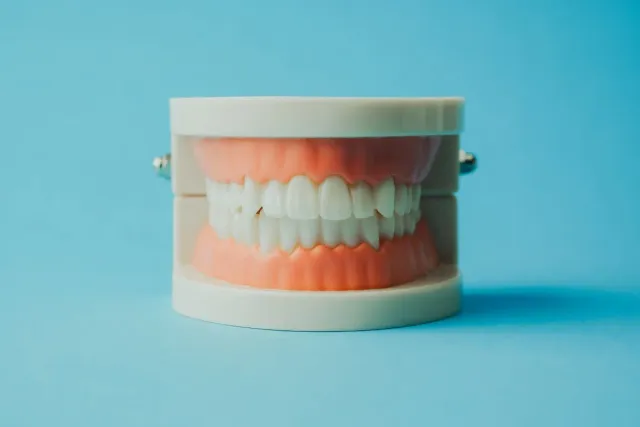
A partial denture replaces some of your teeth. It clips onto your remaining natural teeth using metal clasps or precision attachments, and fills the gaps where teeth are missing. Think of it as a puzzle piece — the natural teeth stay, the partial slots in around them.
A full denture replaces all the teeth in your upper arch, your lower arch, or both. There’s no natural anchor. It rests on your gums and stays in place through suction (upper) and muscle balance (lower), or by clipping onto dental implants if you go that route.
If you still have healthy teeth that can support attachments, you’re a partial candidate. If you’ve lost every tooth in one arch or the remaining teeth aren’t salvageable, you’re looking at a full. There’s a small middle ground — patients with only a few weak teeth left where extraction plus a full denture actually gives a better long-term outcome — but that’s a call your dentist has to make in-person, not something to guess from home.
When Partial Dentures Are the Right Fit
Partial dentures are the go-to when you’re missing 1-13 teeth and have enough healthy teeth left to support the appliance. The most common patterns I see in the Huntington Beach chair:
- Patient in their 50s or 60s who lost molars over the years and can’t chew effectively on one side
- Missing front teeth from an old accident where a dental bridge isn’t a great fit
- Patients bridging the gap financially before committing to dental implants — a partial can serve for years while they save
The two main styles are acrylic partials (cheaper, bulkier, best as a transitional appliance) and cast-metal partials with a chrome-cobalt framework (thinner, more durable, better long-term daily wear). There’s also a flexible nylon-based option called Valplast that hides the clasps better — good for front teeth, but softer and less precise than cast metal.
When Full Dentures Are the Right Fit
Full dentures come into the picture when there’s nothing viable left to anchor a partial to. That happens for a few reasons:
- Advanced periodontal disease has loosened or lost the remaining teeth
- Multiple failed root canals or heavily broken-down teeth that can’t be saved
- Long-time denture wearers whose partial no longer fits because the remaining teeth have shifted or been lost
Patients often assume moving to a full denture is a step backwards. It doesn’t have to be. A well-made full denture, especially one stabilized on 2-4 implants, restores chewing and speech in ways that a poorly-fitting partial cannot. If you’ve been dealing with sore, mobile teeth for years, the transition can actually be a relief.
Full vs Partial Dentures Cost Compared
Prices vary by material and lab, but here’s what full vs partial dentures cost in Huntington Beach in 2026:
- Acrylic partial denture (single arch): $1,200-$1,800
- Cast-metal partial denture (single arch): $1,800-$2,500
- Flexible/Valplast partial (single arch): $1,300-$2,200
- Basic full denture (single arch): $1,000-$1,800 economy, $1,800-$3,500 mid-range
- Premium full denture with better teeth and gum aesthetics (single arch): $3,500-$6,000
- Implant-retained overdenture (2-4 implants + full denture): $6,000-$18,000 per arch
A few things that don’t show up on the sticker but move the total: pre-treatment extractions ($150-$400 per tooth), any bone reshaping needed before impressions, and immediate dentures (a temporary you wear the day teeth come out — typically $500-$800 additional). Dental insurance usually covers 50% of one denture per arch every 5-8 years, though there’s often a waiting period on new plans. For a fuller cost breakdown on the implant side of the comparison, see dental implant cost in Huntington Beach.
Comfort and Fit — What Actually Feels Different
This is where full vs partial dentures separate more than any spec sheet suggests.
Partial dentures are generally more comfortable out of the gate. They clip onto natural teeth, so retention is mechanical and immediate — you don’t have to learn how to hold them in with your tongue and cheeks. The trade-off is that the clasps put constant lateral pressure on the anchor teeth. Over 5-10 years, that can loosen the supporting teeth if home care and professional cleanings slip.
Full dentures have a steeper learning curve. Upper full dentures use suction against the palate and generally get comfortable within a few weeks. Lower full dentures are the hard case — there’s no palate to grip, so the appliance sits on a narrow ridge and shifts more. Most lower full denture patients I see are happier once we add 2 implants for retention, even a decade after the original appliance. That’s the honest reality.
Both types need daily removal and cleaning, and both take some getting used to for speech — expect 2-4 weeks before “S” sounds and enunciation feel normal again.
How Long Each Type Lasts
Under normal daily wear:
- Acrylic partials: 3-5 years before needing replacement
- Cast-metal partials: 7-10 years, sometimes longer with good maintenance
- Full dentures: 5-8 years before the gum-side needs relining or the appliance needs replacing entirely
The reason nothing lasts forever: your jawbone shrinks after teeth are removed. Over years, that shrinkage changes the shape of your gum ridge, and the denture that fit perfectly at year one gets loose by year five. Relining ($300-$600) can extend the life 1-3 years by rebuilding the gum-side surface, but eventually you’re making a new appliance. The comparison I usually draw for patients is between dentures and dental implants — implants preserve bone, dentures accelerate its loss.
Implant-Supported Alternatives Worth Considering
If you’re leaning toward a full denture, at least ask about an implant-retained overdenture before you commit. Two implants on the lower jaw with a snap-in denture is one of the highest-satisfaction procedures we offer. It runs $6,000-$10,000 per arch — meaningfully more than a standard full denture but roughly a third of the cost of a full arch of individual implants.
For partial candidates, the equivalent conversation is whether a single implant with a crown might serve better than a partial for a small gap. That’s a conversation worth having early — a well-placed implant can eliminate the need for a partial altogether, and it doesn’t put stress on your neighboring teeth.
FAQ: Full vs Partial Dentures
1. Are partial dentures more comfortable than full dentures? Usually yes, at least initially. Partials clip onto natural teeth for immediate retention. Full dentures require learning to stabilize them with tongue and cheek muscles, which takes 2-6 weeks.
2. Can I sleep in my dentures? Not recommended. Your gums need time to breathe and recover, and sleeping in dentures increases the risk of oral yeast infections and bone loss. Take them out at night and store them in water or denture solution.
3. How much does a single-arch denture cost in Huntington Beach? Basic full dentures run $1,000-$1,800 per arch and mid-range $1,800-$3,500. Premium options with better aesthetics reach $3,500-$6,000. Partials range from $1,200 for acrylic to $2,500 for cast-metal. See our 2026 Huntington Beach denture cost guide for a complete breakdown.
4. Will my dental insurance cover dentures? Most plans cover 50% of one denture per arch every 5-8 years. Waiting periods on new plans typically run 6-12 months. Verify with your carrier before you schedule impressions.
5. Can I switch from a partial to a full denture later? Yes, and many patients do. When the anchor teeth eventually fail, the partial is remade as a full — often with immediate dentures placed the same day as extractions so you’re never without teeth.
6. Do partial dentures damage the teeth they clip to? Not if they’re fit well and you keep up with cleanings. Poor-fitting partials or neglected hygiene can loosen the anchor teeth over time. Have the fit checked annually.
If you’re weighing full vs partial dentures for yourself, book a consult and I’ll walk you through the exam and impressions in a single visit. According to the American College of Prosthodontists, matching the appliance to your specific bone anatomy and remaining tooth health is what separates a denture you tolerate from one you forget you’re wearing.
Prices are typical ranges at Peninsula Dentistry & Orthodontics as of September 2026, before insurance. Your exact fee depends on the exam and is quoted in writing before treatment starts.