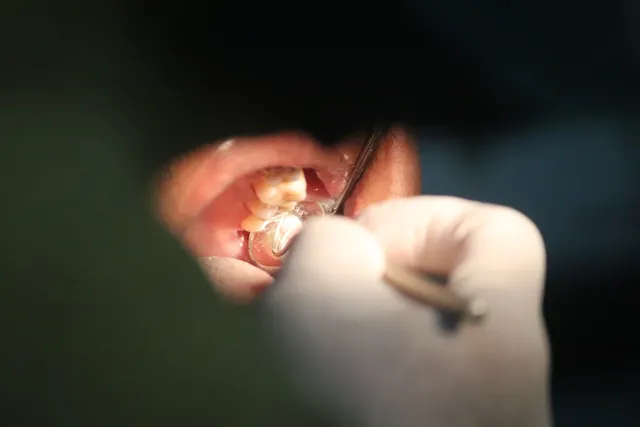

The two questions patients ask me most about tooth-colored fillings sit right next to each other: will anyone be able to tell, and what’s the composite fillings cost going to look like? Both are fair. You don’t want a silver spot flashing when you laugh, and you don’t want a surprise on the treatment plan either. This post walks through what actually happens when a composite is placed at Peninsula Dentistry in Huntington Beach — how well it blends, what it costs, and how long you can reasonably expect it to hold up.
What Makes Composite Fillings Blend In With Your Teeth
A composite filling is a tooth-colored resin loaded with microscopic glass or ceramic particles. Modern composites come in dozens of shade variations, and I match them the same way an artist mixes paint — by comparing several tabs against your tooth in natural light and blended light before I start. Enamel isn’t one solid color; it’s layered, with slight translucency at the edges and more opacity in the body of the tooth. A skilled placement mimics that layering.
Front teeth are the aesthetic proof point. When a composite is done well, the patient in the mirror can’t find it — and neither can anyone else. Back teeth are more forgiving on shade but still benefit from careful polishing so the surface reflects light the way real enamel does.
Where composites fall short of “invisible” is on very large restorations, teeth that have lost most of their natural structure, or cases where the surrounding enamel is heavily discolored. Those situations often push us toward porcelain — either a crown or a veneer — because porcelain holds its color and translucency better over a decade-plus timeframe. I wrote a companion piece on why composite has replaced silver amalgam that gets deeper into the material science if you’re curious.
The Real Composite Fillings Cost in Huntington Beach
Here are the numbers we work with at Peninsula Dentistry in 2026. These are honest ranges — the ones we quote at consultation, not the artificially low teaser numbers you sometimes see in ads.
- One-surface composite filling: $180 – $280
- Two-surface composite filling: $230 – $380
- Three-surface composite filling: $280 – $450
- Four or more surfaces (large restoration): $350 – $550
“Surfaces” refers to how many sides of the tooth the filling touches — chewing surface, side facing the cheek, side facing the tongue, and the sides between neighboring teeth. A small cavity on the chewing surface is one surface. A larger cavity that wraps around the corner of a molar can easily hit three.
Most PPO dental insurance plans cover composite fillings on back teeth at the same rate as amalgam these days, though a few older plans still pay only the amalgam rate and ask you to cover the difference. We check that for you before treatment so nothing surprises you at checkout. If your restoration is large enough that a filling isn’t the right long-term solution, we’ll walk through the tradeoffs with you before we pick up an instrument — that decision belongs in the consultation chair, not the treatment chair. Our full restorative dentistry menu covers the alternatives when they apply.
According to the American Dental Association’s MouthHealthy resource, material choice and location are the two biggest cost drivers for any filling — which matches what we see in practice.
How Long Do Composite Fillings Actually Last
The short answer: 7 to 10 years on average, with well-placed composites in low-stress locations routinely making it to 12 or 15. Composites in high-stress positions — the biting surfaces of second molars, especially in patients who grind — tend to land at the shorter end of that range.
Three factors move the number more than anything else:
Isolation during placement. Composite bonds to your tooth chemically, and moisture ruins the bond. If the tooth wasn’t properly isolated with a rubber dam or equivalent, the filling is compromised the day it goes in. This is the single biggest technique variable.
Occlusion — how your bite lands on the filling. A high spot puts extra force on the restoration every time you chew. We check bite with articulating paper before you leave and adjust until it’s right.
Home care and grinding. Composite doesn’t develop cavities, but the tooth around it can. Flossing at the margins matters more with composites than most patients realize. If you clench or grind, a nightguard extends the life of every restoration in your mouth.
If you want the fuller comparison against silver amalgam over decades, our post on how long do fillings last breaks the numbers down side by side.
When a Filling Isn’t Enough: Bonding, Veneers, and Crowns Compared
Composite fillings, cosmetic bonding, veneers, and crowns all sit on a spectrum. Which one is right depends on how much tooth structure is left and how much cosmetic change you want.
- Composite filling — repairs decay or a chip. Bonds to remaining enamel. Best for small to moderate restorations.
- Cosmetic bonding — same material as a filling, used cosmetically to reshape or close small gaps on otherwise healthy teeth.
- Porcelain veneer — a thin porcelain shell bonded to the front of a tooth. Better long-term color stability than composite. Higher cost.
- Crown — full coverage of a tooth that’s lost significant structure. Zirconia or porcelain. The right call when a filling would leave too little tooth behind.
If your question is really “veneers vs. bonding” or “should this be a crown,” those live in a different conversation than composite fillings cost. Our guide on crowns vs. veneers vs. bonding is the clearest walkthrough of that decision tree.
Getting the Best Aesthetic Result From Your Composite Filling
A few things move the outcome more than most patients realize:
- Shade matching in natural light. Fluorescent operatory lighting hides subtle color differences. Good offices bring the shade tab to a window or a color-corrected lamp.
- Layered placement, not a single blob. On front teeth especially, the composite is built up in thin layers with slightly different opacities to imitate real enamel.
- Polishing that goes past “smooth.” A high polish reflects light like enamel does. A quick polish leaves the surface looking slightly dull compared to neighboring teeth.
- Curing time honored. The blue curing light needs full exposure at each layer — cutting corners here weakens the bond and shortens the filling’s life.
None of this is exotic. It’s just careful work by someone who cares about the outcome.
Frequently Asked Questions
How much does a composite filling cost without insurance in Huntington Beach?
Expect $180 to $450 depending on the size, with most single-surface fillings landing in the $200–$260 range. We provide an exact quote after examining the tooth and taking an X-ray so there are no surprises.
Can composite fillings stain over time?
Yes, but slowly. Coffee, red wine, and tobacco can dull the surface polish after several years. A quick professional polish at a cleaning appointment usually restores the original shade. If a filling has stained through the material rather than on the surface, replacement is the fix.
Are composite fillings safe if I’m pregnant?
Generally yes — modern composites don’t contain mercury, and the materials are considered safe during pregnancy for necessary restorative work. We time non-urgent treatment for the second trimester when possible.
Do composite fillings hurt going in?
The tooth is fully numbed with local anesthetic before we start, so the placement itself is painless. Some patients feel mild sensitivity to cold for a few days afterward, which usually resolves on its own. If sensitivity lasts more than two weeks, call us — we can adjust the bite or take a closer look.
Can I replace old silver fillings with composite ones just for looks?
Yes. Many patients ask about it once they see how invisible modern composites look. If the existing amalgam is intact and the tooth around it is healthy, replacement is elective and cosmetic — worth doing if it’s important to you, but not medically required.
Is composite as durable as amalgam?
For small to medium fillings, modern composites are effectively equivalent. For very large restorations in molars with heavy bite force, amalgam still holds a slight longevity edge — which is why we sometimes recommend a crown or an onlay instead of an oversized composite in those cases.
Related Reading
- Tooth-Colored Fillings: Why Composite Has Replaced Silver
- How Long Do Fillings Last? Composite vs. Amalgam, Honestly
- Dental Crowns vs. Veneers vs. Bonding: Which Is Right for You?
Thinking about replacing an old silver filling — or wondering what your composite fillings cost would actually look like? Call Peninsula Dentistry in Huntington Beach at (714) 374-8800 or book a consultation online. Dr. Tran will show you the tooth on our screen, walk through the options, and quote real numbers before anything gets scheduled. Composite fillings in Huntington Beach done right, at our restorative dentistry practice.
Prices are typical ranges at Peninsula Dentistry & Orthodontics as of September 2026, before insurance. Your exact fee depends on the exam and is quoted in writing before treatment starts.