If you’ve ever bitten your cheek and then spent the next week wincing every time you drank orange juice, you’ve met a canker sore. It’s one of the most common complaints I hear in Huntington Beach and one of the most misunderstood — patients regularly arrive convinced they have something contagious, something serious, or something they gave to their family. In 20+ years of practice, most mouth-sore visits end with me reassuring someone that what they have is annoying, self-limiting, and entirely their own.
That said, a small subset of mouth sores are not ordinary canker sores, and knowing where the line falls matters. Let’s cover both.
What a Canker Sore Actually Is
The clinical name is aphthous ulcer. It’s a small, shallow break in the soft lining of the mouth — the mucosa — that exposes the nerve endings underneath. That exposure is why something the size of a pencil eraser can dominate your entire day.
A classic canker sore is round or oval, with a white, yellowish, or gray center and a distinct red inflammatory halo. They appear on soft, movable tissue — the inside of the cheeks and lips, the base of the gums, under or on the sides of the tongue, and the soft palate — not on the hard palate or the attached gum tissue bound down to bone.
Most are minor aphthous ulcers: under a centimeter across, healing in one to two weeks without a scar. Less commonly I see major aphthous ulcers, which are larger, deeper, and can take several weeks to resolve. A third pattern, herpetiform ulcers, presents as clusters of many tiny sores that merge together — a misleading name, because they have nothing to do with herpes.
Here’s the part that matters most for peace of mind: canker sores are not caused by a virus, and they are not contagious. You cannot catch one, give one to your kids, or spread one by sharing a drink.
Canker Sore vs. Cold Sore: The Distinction That Matters
This is the single most useful thing in this article, and it’s the correction I make most often. These two conditions are routinely confused, and they have almost nothing in common.
Canker sores (aphthous ulcers)
- Occur inside the mouth on soft, movable tissue
- Are not viral and not contagious
- Appear as flat ulcers with a white or yellow center and red border, with no blister stage
- Are triggered by stress, trauma, diet, and deficiencies
Cold sores (herpes labialis)
- Occur outside the mouth — on the lip border, around the lips, occasionally the nose or chin
- Are caused by the herpes simplex virus (HSV-1) and are contagious, especially while blistering
- Begin as a cluster of small fluid-filled blisters that rupture and crust over
- Often start with a tingle or burn a day before anything is visible
- Recur in the same spot because the virus stays dormant in a nerve ganglion
The practical shortcut: location tells you almost everything. Inside the mouth on soft tissue is a canker sore. On or around the lip border with a blister-and-scab progression is a cold sore.
It matters because the management is completely different. Cold sores respond to antiviral medication, especially when started at the first tingle, and require caution around infants and immunocompromised people. Canker sores don’t respond to antivirals at all and require no isolation whatsoever.
What Causes Canker Sores?
There isn’t a single cause, which frustrates patients who want one answer. What exists instead is a well-documented list of triggers, and most people who get them recurrently can eventually identify their own two or three.
Minor trauma. The most common trigger I see. Biting your cheek, an aggressive toothbrush bristle, a sharp chip on a tooth, a poking orthodontic wire, or a rough denture edge — any small injury to the lining can seed an ulcer in a susceptible person. If the same spot keeps ulcerating, there’s usually a sharp edge causing it, and smoothing that edge at a routine exam ends the cycle.
Stress. Well documented and very real. I see a clear pattern in students during exam periods and in patients going through demanding stretches at work.
Sodium lauryl sulfate (SLS) in toothpaste. The trigger most worth knowing about, because it’s the easiest to eliminate. SLS is the foaming detergent in most mainstream toothpastes, and in some people it strips the protective mucin layer of the oral lining. If you get canker sores often, switching to an SLS-free toothpaste for two or three months is the highest-yield experiment you can run.
Acidic and abrasive foods. Citrus, tomatoes, pineapple, vinegar, and coffee are frequent offenders, as are chips, crusty bread, and nuts. These may not cause an ulcer outright, but they trigger one in susceptible tissue and aggravate an existing one.
Nutritional deficiencies. Low vitamin B12, iron, folate, and sometimes zinc are associated with recurrent aphthous ulcers. If you’re getting several a month, this is worth raising with your physician for a blood panel — correcting a genuine deficiency can dramatically reduce recurrence.
Hormonal changes. Some women notice a cyclical pattern tied to menstruation.
Underlying conditions. Celiac disease, inflammatory bowel disease, Behçet’s disease, and some immune disorders can present with recurrent oral ulcers. Uncommon, but it’s why a pattern of frequent severe ulcers deserves a real conversation. The National Institute of Dental and Craniofacial Research has a useful patient overview of mouth sores if you want to read further.
How to Get Rid of Canker Sores: What Actually Helps
I’ll be straight with you: nothing makes a canker sore vanish overnight. The honest goal is reducing pain and shortening the miserable phase. Here’s what genuinely helps, roughly in order of usefulness.
Topical numbing gels. Over-the-counter benzocaine products give real, immediate relief. Short-lived, but they make eating possible. Apply after meals rather than before, so you’re not chewing on numb tissue.
Protective pastes and patches. Underrated. Much of the pain comes from ongoing friction — tongue, teeth, food — and physically covering the ulcer interrupts that cycle. Some patients get more benefit from a barrier than from a numbing agent.
Warm salt-water rinses. Half a teaspoon of salt in warm water, several times daily. Cheap, gentle, and mildly anti-inflammatory. Skip alcohol-based mouthwashes — they sting badly and offer nothing here.
Avoid your triggers while it heals. Sidestep the citrus, tomato sauce, and chips. Not a cure, but it prevents a two-day sore from becoming a two-week one through repeated re-irritation.
Prescription options. For severe or frequently recurrent ulcers, we can prescribe a topical corticosteroid or an anti-inflammatory rinse, which reduce both pain and duration in a way over-the-counter products don’t. If you’re getting ulcers monthly and managing them with drugstore gel, bring it up at your next visit.
What doesn’t work: dabbing on aspirin (chemical burn), full-strength hydrogen peroxide (irritates and delays healing), and antibiotics (there’s no bacterial infection to treat).
Normal Healing: What the Timeline Should Look Like
A minor canker sore follows a consistent course. Days one through three or four are the worst — sharpest pain, most reactive to anything acidic or salty. Then the ulcer shrinks, the red halo fades, and by day seven to fourteen it’s gone, with no scar.
The trajectory should be steady improvement after that first painful stretch. A sore holding steady or growing at the two-week mark isn’t following the normal pattern, and that’s the observation that matters.
Red Flags: When a Mouth Sore Warrants a Visit
Most canker sores never need professional attention. These situations do.
A sore lasting longer than two to three weeks. The most important item on the list. Ordinary aphthous ulcers heal within two weeks; a sore that outlives that window needs to be evaluated, not monitored from home for another month.
A sore larger than about a centimeter. Major aphthous ulcers exist and are benign, but size is a reason for an exam rather than a guess.
Recurring clusters. A new crop arriving before the last one heals points toward an underlying driver — nutritional, immune, or systemic — worth investigating.
A sore that doesn’t hurt. Counterintuitive, and the presentation that concerns me most. Canker sores hurt. A persistent painless ulcer or patch is a different category of finding and needs evaluation.
Any red or white patch that won’t go away, unexplained numbness, a lump in the mouth or neck, or difficulty swallowing.
Fever, or an inability to eat or drink because of the pain.
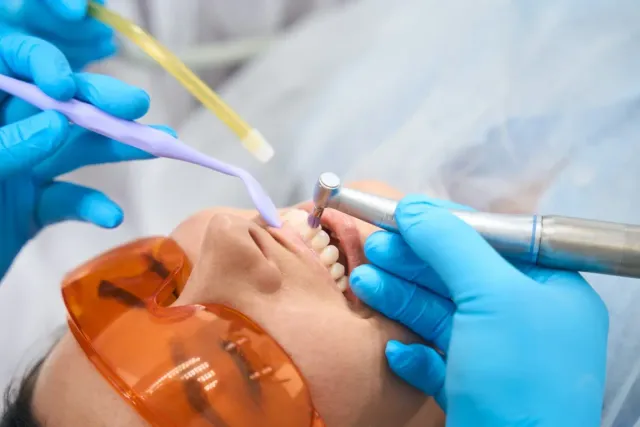
That fourth item is why we perform a soft-tissue exam at every visit. An oral cancer screening takes about two minutes and is built into every routine dental cleaning and exam here — tongue, floor of the mouth, cheeks, palate, and neck lymph nodes. Nearly always it confirms everything is fine. Occasionally it catches something at a stage where the outcome is excellent, and that’s the entire reason it exists.
I’m not trying to alarm anyone. If you have a painful ulcer inside your cheek that showed up after you bit yourself, it’s a canker sore and it’ll be gone in a week and a half. The two-week rule is simply a clean threshold separating the ordinary from the worth-checking, and it costs you nothing to apply.
Why Choose Peninsula Dentistry in Huntington Beach
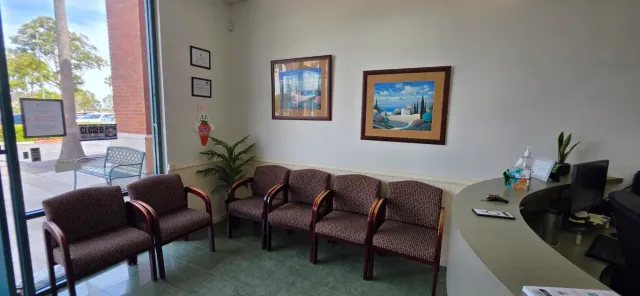
Peninsula Dentistry & Orthodontics includes a full oral cancer screening in every routine exam at our Huntington Beach office on Goldenwest Street, checking the tongue, cheeks, palate, floor of the mouth and neck lymph nodes at no extra charge.
Dr. Tran earned his DDS from NYU College of Dentistry and completed a postgraduate residency at the West LA VA Hospital, where soft-tissue pathology was routine daily practice. That background is why the soft-tissue exam here isn’t a quick glance — it’s a deliberate, systematic look every visit.
We accept most PPO plans, including Delta Dental, Aetna, Cigna, MetLife, Guardian, Humana and United Concordia, with CareCredit and Cherry financing available. Hours are Monday and Wednesday 9-6, Tuesday and Friday 9-2, Thursday 9-5, and Saturdays by appointment. Serving Huntington Beach, Fountain Valley, Westminster, Seal Beach, Sunset Beach, Costa Mesa and Newport Beach.
A canker sore is one of the few problems in my field where the right answer is usually patience plus a numbing gel. Know your triggers, protect the site, and give it two weeks — and if it’s still there after that, get in touch rather than waiting it out another month.
Frequently Asked Questions
What causes canker sores?
There is no single cause, but the most consistent triggers I see are physical trauma to the lining of the mouth, stress, sodium lauryl sulfate in toothpaste, highly acidic foods, and deficiencies in vitamin B12, iron, or folate. Hormonal shifts and certain autoimmune conditions also play a role for some people. Most patients eventually identify one or two personal triggers that account for the majority of their outbreaks.
How long does a canker sore last?
A typical minor canker sore heals on its own in seven to fourteen days without scarring. The first three or four days are usually the most painful, after which the sore starts to shrink and the discomfort tapers off. Any sore that has not clearly improved after two weeks or has lasted beyond three weeks should be looked at.
What is the difference between a canker sore and a cold sore?
Canker sores occur inside the mouth on soft, movable tissue and are not contagious or viral. Cold sores are caused by the herpes simplex virus, appear on the outside of the lips or around the mouth as fluid-filled blisters, and are contagious. Location is the fastest way to tell them apart — inside the mouth points to a canker sore, on or around the lip border points to a cold sore.
How do you get rid of canker sores fast?
Nothing eliminates a canker sore overnight, but you can shorten the painful phase and protect the area while it heals. Over-the-counter benzocaine gels numb the sore, protective pastes form a barrier against food and friction, and a warm salt-water rinse keeps the site clean. For frequent or severe cases we can prescribe a topical corticosteroid or an anti-inflammatory rinse that meaningfully reduces both pain and duration.
When should I see a dentist about a mouth sore?
See a dentist if a sore lasts longer than two to three weeks, is larger than about a centimeter, keeps returning in clusters, comes with fever or difficulty eating, or is painless but persistent. A painless ulcer that will not heal is the presentation that concerns me most, because ordinary canker sores hurt. Any sore that outlives the normal two-week window deserves a look and possibly an oral cancer screening.
Got a mouth sore that isn’t healing, or canker sores that keep coming back? Call Peninsula Dentistry in Huntington Beach at (714) 374-8800 — after hours, text the same number. Dr. Tran will examine the area, tell you plainly what it is, and help you figure out the trigger so it stops happening.