If you have searched “antibiotics for tooth infection” at two in the morning with the side of your face throbbing, I understand exactly why. You want something that makes it stop. Here is the honest answer I give patients in my Huntington Beach chair every week: antibiotics for a tooth infection can buy you time and take the swelling down, but they do not cure the infection. They cannot. The reason is anatomical, not a matter of picking a stronger drug, and once you understand it the whole treatment plan makes more sense.
Why Antibiotics Alone Cannot Cure a Tooth Infection
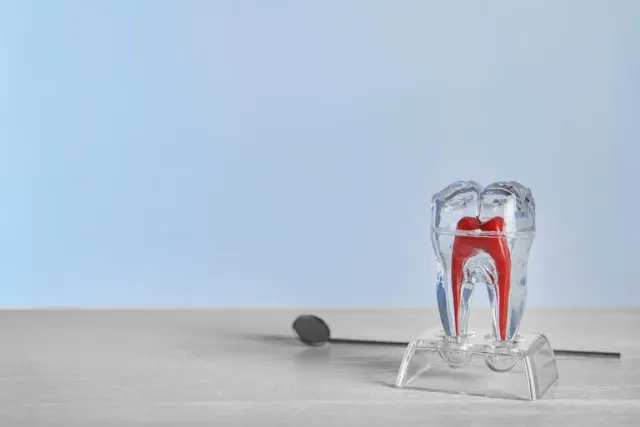
A tooth infection almost always starts inside the tooth. Decay, a crack, or trauma lets bacteria reach the pulp — the nerve and blood vessel bundle in the center. The pulp becomes inflamed, then it dies. And that is the critical part: once the pulp is dead, the inside of that tooth has no blood supply.
Antibiotics travel through your bloodstream. That is the only way they reach tissue. So a drug that works beautifully in a skin infection or a sinus infection simply cannot arrive, in any useful concentration, inside a dead tooth. The bacteria sitting in that chamber are effectively behind a wall the medication can’t cross.
What antibiotics can do is act on the infection where it has spilled out — into the bone at the root tip, into the surrounding gum and facial tissue. That is real and sometimes important. It is why swelling goes down and the pressure eases within a day or two. But the reservoir is untouched. Stop the course, and the bacteria repopulate from the same source they always came from.
In 20+ years of practice I have seen patients cycle through three or four antibiotic courses over a year for the same tooth, each one working a little less well than the last. The tooth was never treated. That is the pattern I want you to avoid.
What Actually Treats a Tooth Infection
There are exactly two definitive answers, and both of them involve removing the infected tissue physically:
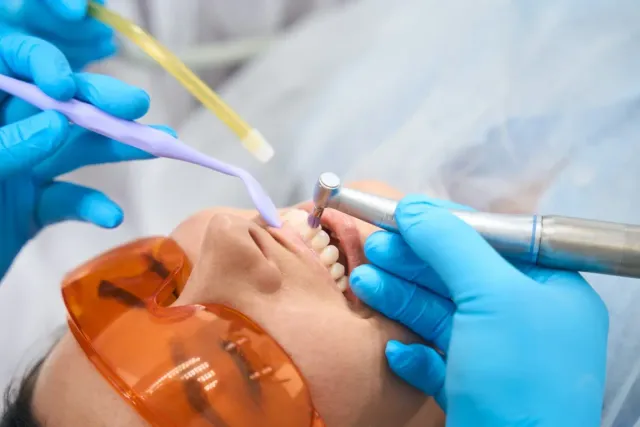
Root canal treatment. We open the tooth, clean the dead and infected pulp out of the canals, disinfect them, and seal them. The reservoir is gone and the tooth stays. Our root canal treatment page walks through what the appointment actually looks like, and if you’re not sure whether that’s where you are, our post on the signs you need a root canal covers the symptoms that point that direction.
Extraction. If the tooth is fractured below the bone, has too little structure left to restore, or the infection has destroyed too much supporting bone, removing it eliminates the source completely.
There is a third piece that often gets overlooked: drainage. When an abscess has formed a pocket of pus, releasing that pressure gives immediate relief and removes bacteria in bulk — often more effectively than any prescription.
Peninsula Dentistry & Orthodontics provides same-day emergency dental care for tooth infections in Huntington Beach, where Dr. Kenneth Tran — an NYU College of Dentistry graduate with more than 20 years in practice — treats the source of the infection rather than only prescribing around it.
When Dentists Do Prescribe Antibiotics
I am not anti-antibiotic. I am against using them as a substitute for treatment. There are clear situations where they belong in the plan alongside definitive care:
- Spreading swelling. When infection moves out of the immediate area and into the facial spaces — cheek, jaw, floor of the mouth — antibiotics help contain it while we get the tooth treated.
- Systemic involvement. Fever, malaise, swollen lymph nodes, or feeling genuinely unwell means the infection is no longer local.
- Immunocompromised patients. People on chemotherapy, immunosuppressants, or with poorly controlled diabetes have less margin for error, and I lower my threshold accordingly.
- Before certain procedures. Some patients with specific cardiac conditions or joint replacements need premedication under established guidelines. That is a conversation between you, your physician, and me.
- When definitive treatment must be delayed. If you need medical clearance first, or the swelling is too severe to get profound anesthesia, antibiotics can bridge the gap for a few days.
Notice that in every one of those cases, the antibiotic supports the real treatment. It never replaces it.
I will also say plainly what I do not do: I do not name specific drugs, doses, or durations in a blog post. That choice depends on your medical history, allergies, what you have taken recently, what the infection looks like, and where it is. It is a prescriber’s decision made after an exam — not something to pattern-match from the internet.
Why Leftover or Borrowed Antibiotics Are Genuinely Dangerous
This is the part I wish more people heard before they act. A few times a year in Huntington Beach someone arrives at my office having taken half a bottle of something a family member had left over. Here is what that does:
It masks the picture without fixing it. A partial course can suppress symptoms enough that you feel better and cancel the appointment. Meanwhile the infection continues quietly, and the version that comes back is harder to treat.
It is usually the wrong drug. Dental infections involve a specific mix of bacteria. An antibiotic prescribed for a urinary tract infection or a respiratory infection may have almost no useful activity against them.
The dose and duration are wrong by definition. Leftovers exist because someone didn’t finish a course. What remains is, by construction, not a full course of anything.
It risks a reaction you didn’t plan for. Allergies, interactions with your current medications, and side effects are real, and nobody screened for them.
It contributes to resistance. Every incomplete or unnecessary course selects for bacteria that survive it. The National Institutes of Health and the American Dental Association’s guidance on antibiotic stewardship both make the same point: dentistry accounts for a meaningful share of outpatient antibiotic prescribing, and a lot of it is avoidable. Resistance is not an abstract public health statistic — it is the reason the drug that would have worked for you in five years might not.
If you have a tooth infection and no appointment yet, call us. Even after hours you can text (714) 374-8800 and we will get you scheduled. That is a better use of your night than a medicine cabinet.
Red Flags: When to Skip the Dentist and Go to the ER
Most tooth infections are handled in a dental office. A small number are not, and the difference matters enormously. Go to an emergency room immediately if you have any of these:
- Difficulty breathing or swallowing, or a feeling that your throat is closing
- Swelling that has closed or is closing your eye
- Swelling spreading down into your neck or under your jaw and tongue
- High fever alongside a face that is visibly worsening hour by hour
- Inability to open your mouth more than a couple of fingers’ width
- Confusion, severe weakness, or a racing heart with any of the above
These suggest infection tracking into spaces where it can compromise your airway or spread further. That is a hospital problem — IV antibiotics, imaging, sometimes surgical drainage — not something a dental chair solves. Do not wait until morning to see if it improves.
Short of those signs, our emergency dental page explains how to reach us and what counts as same-day urgent. Anything involving swelling, throbbing that wakes you up, or a bad taste of drainage in your mouth deserves a call.
What to Expect at Your Emergency Visit
The visit itself is usually less dramatic than the night before it. I will take an X-ray of the tooth, test the nerve response, check how it responds to pressure and temperature, and look at the surrounding tissue and lymph nodes. That tells me whether the pulp is dead, how far the infection has spread into the bone, and whether the tooth is restorable.
From there we either start treatment the same day or get you comfortable and scheduled. If drainage is needed, that often happens on the spot and the relief is immediate. If antibiotics are indicated by the criteria above, you get them — as part of the plan, with a scheduled appointment to actually fix the tooth.
Cost is the other thing on people’s minds at 2 a.m. We take most PPO plans including Delta Dental, Aetna, Cigna, MetLife, Guardian, Humana, and United Concordia, and we offer CareCredit and Cherry financing. Our insurance and payment page has the details, and nobody should delay treating an infection over uncertainty about what it costs.
Why Choose Peninsula Dentistry for a Tooth Infection in Huntington Beach
Dr. Tran earned his DDS at NYU College of Dentistry and completed a postgraduate residency at the West LA VA Hospital, where infection management and complex cases were daily work. That background shapes how we approach an abscessed tooth: identify the source, relieve the pressure, and treat the tooth — using antibiotics when the clinical picture calls for them, not as a default.
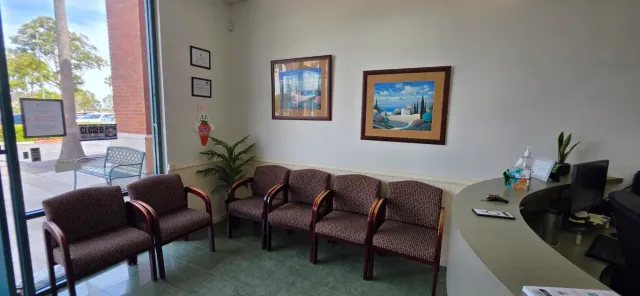
Our office is at 19051 Goldenwest St, Suite 108. We’re open Monday and Wednesday 9-6, Tuesday and Friday 9-2, Thursday 9-5, with Saturday appointments available. After hours, text (714) 374-8800 and we will respond. Serving Huntington Beach, Fountain Valley, Westminster, Seal Beach, Sunset Beach, Costa Mesa and Newport Beach.
Frequently Asked Questions
Will antibiotics cure my tooth infection?
No. Antibiotics can reduce swelling and knock down bacteria in the surrounding tissue, but they cannot reach the dead tissue inside the tooth where the infection lives. That space has no blood supply, so the drug never gets there in a meaningful concentration. The infection returns once the course ends unless the inside of the tooth is treated.
Do I need antibiotics for a tooth infection?
Often no. If the infection is contained to the tooth and the immediate area and can be drained or treated promptly, definitive dental treatment alone resolves it. Antibiotics become appropriate when swelling is spreading, you have a fever, or your immune system is compromised. That decision belongs to a dentist or physician after examining you.
Can I take leftover antibiotics from an old prescription?
Please don’t. A partial leftover course is almost never the right drug at the right dose for the right duration, and taking it can suppress your symptoms just enough to hide a worsening infection. It also feeds antibiotic resistance. Call the office instead so we can look at the actual tooth.
When is a tooth infection an emergency room visit?
Go to the emergency room immediately if you have difficulty breathing or swallowing, swelling that is closing your eye, swelling spreading down into your neck or under your jaw, or a high fever with a rapidly worsening face. These signs suggest the infection is spreading beyond the tooth and needs hospital-level care, not a dental appointment.
How fast do antibiotics work on a dental abscess?
When they are appropriate, most people notice swelling and pressure easing within about 48 hours. Feeling better is not the same as being better. The source of the infection is still inside the tooth, so you still need the root canal or extraction that actually removes it.
If you’re weighing antibiotics for a tooth infection right now, the faster path to relief is an exam. Call Peninsula Dentistry in Huntington Beach at (714) 374-8800 — after hours, text the same number — or book online, and Dr. Tran will find the source and treat it.