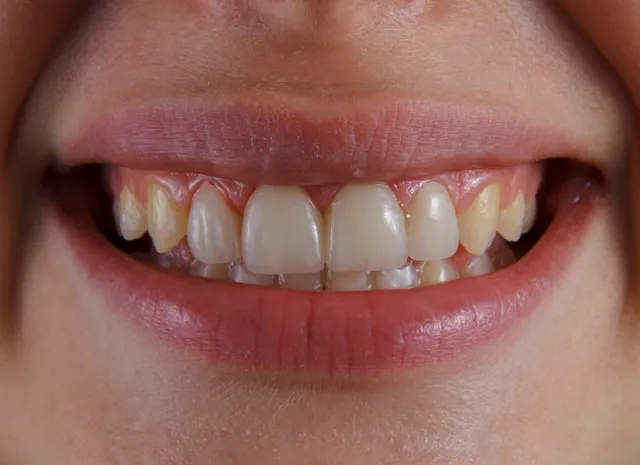
“Dr. Tran, my teeth look longer than they used to. Is that… normal?” I hear this question several times a week in my Huntington Beach practice, usually from patients in their 40s and 50s who’ve just noticed the change while brushing. The answer is no — it’s not normal, and it’s almost always gum recession. The good news is that gum recession is often preventable, and when caught early, its progression can be stopped. The less-good news is that gum tissue that’s already lost doesn’t grow back on its own. Whatever’s causing the recession needs to be identified and addressed before more damage happens.
In 20+ years of practice, I’ve seen gum recession in patients as young as their 20s and as old as their 80s. The causes aren’t always what people assume. It’s not automatically aging, it’s not always your brushing, and it’s not always gum disease — though each of those is sometimes the culprit. Let me walk you through what’s actually happening and what actually helps.
What Gum Recession Actually Is
Your gums are meant to fit snugly around each tooth like a collar, sealing off the area where the tooth meets the bone. Gum recession happens when that gum tissue pulls back from the tooth, exposing more of the tooth’s surface — and sometimes the root — than should be visible. A small amount of recession is cosmetic. Significant recession is a health problem.
The reason it matters goes beyond looks. The crown of the tooth (the part you normally see) is covered by enamel, the hardest substance in your body. But the root of the tooth is covered by a much softer material called cementum, which isn’t nearly as resistant to decay, wear, or sensitivity. When recession exposes the root, you’re exposing tissue that wasn’t designed for the harsh environment of the mouth. That’s why recession often leads to:
- Tooth sensitivity, especially to cold
- Root cavities (which progress faster than enamel cavities)
- Increased risk of tooth loss
- Aesthetic concerns (longer-looking teeth, visible roots)
The 4 Real Causes of Gum Recession
In my experience, almost every case of gum recession traces back to one or more of these causes. Figuring out which one is driving yours is the first step in stopping it.
Cause 1: Gum Disease (Most Common)
This is the single biggest cause of recession I see in patients over 40. When bacterial plaque accumulates along the gumline, the body responds with inflammation. If the plaque isn’t removed, the inflammation becomes chronic, and your immune system starts breaking down the supporting tissues around the teeth — including the gums and the bone.
Gum disease-driven recession is usually generalized (affecting multiple teeth) and is often accompanied by bleeding gums, bad breath, and deeper pockets between the teeth and gums. It progresses slowly, which is why most patients don’t notice until significant damage is done. According to the American Academy of Periodontology, roughly half of American adults over 30 have some form of periodontal disease — and gum recession is one of its most common visible signs.
What actually helps: Professional periodontal treatment to remove the bacterial source, more frequent cleanings (every 3-4 months) to prevent recurrence, and improved daily home care targeting the gumline.
Cause 2: Aggressive Brushing
This one surprises people. The most dedicated, twice-a-day, scrub-hard-to-really-get-them-clean brushers often end up with the worst recession. Hard brushing — especially with a stiff-bristled toothbrush and a back-and-forth sawing motion — literally abrades the gum tissue away over years. I often see this in right-handed patients whose left side has more recession than the right, because the dominant hand applies more force to the opposite side of the mouth.
Aggressive brushing recession is usually:
- Localized to the side of the mouth corresponding to your dominant hand
- Affecting canines and premolars most
- Accompanied by no bleeding or signs of gum disease
- Often paired with wear grooves (notches) at the gumline of the tooth
What actually helps: Switch to a soft-bristled toothbrush — firm or medium bristles are outdated advice. Use gentle pressure; if the bristles are visibly splaying, you’re pressing too hard. Brush in small circles or short vertical strokes, not aggressive horizontal scrubbing. An electric toothbrush with a pressure sensor can be a game-changer. Hold the toothbrush with your fingertips, not a fist — your grip affects the force you apply.
Cause 3: Grinding and Clenching
Chronic bruxism creates excessive forces on teeth. Those forces are transmitted through the tooth to the surrounding bone and gum tissue. Over time, the bone can recede and the gums follow. Clenchers and grinders often show recession on the side they favor, and the teeth may also show wear facets (flat spots) on the biting surfaces.
Grinding-related recession often shows up with worn, flattened chewing surfaces, morning jaw soreness or headaches, tooth sensitivity, and small cracks or chips in the enamel.
What actually helps: A custom nightguard to absorb grinding forces, stress management strategies, and treating sleep-disordered breathing if present (a common underlying cause).
Cause 4: Genetics and Anatomy
Some people are simply born with thinner gum tissue (referred to as “thin biotype”) or teeth positioned too close to the outside of the jawbone. These anatomical factors make recession more likely even with good home care and no other risk factors.
If your parents or siblings have recession, you’re more likely to as well. This doesn’t mean recession is inevitable — it means you need to be more vigilant about the other risk factors and more proactive about professional care.
What actually helps: More frequent professional monitoring (every 3-4 months instead of 6), early intervention before recession becomes advanced, and consideration of grafting procedures to thicken thin tissue before major recession develops.
The Other Factors (Less Common but Real)
- Orthodontic treatment. Aggressive tooth movement in some cases can push teeth beyond the bony envelope, causing recession.
- Lip and tongue piercings. Repeated trauma from jewelry against the gums causes localized recession on the tongue side of lower front teeth.
- Smoking and tobacco use. Significantly increases the risk of gum disease and impairs healing.
- Hormonal changes. Pregnancy and menopause can temporarily worsen gum inflammation.
The Misconception: “It’s Just Aging”
I want to debunk this directly because patients tell me all the time that their previous dentist said recession was “normal for their age.” That’s not accurate. Healthy gums don’t recede simply because you’re getting older. Gum recession is a response to a specific insult — disease, force, trauma, or anatomy — not a natural consequence of aging.
Older patients have more recession on average because they’ve had more time for those causes to do their work. But a healthy 75-year-old with good home care, regular professional cleanings, and no risk factors should not have significant recession. If recession is happening, something is causing it, and identifying the cause is how we stop it.
When to Worry
Bring up any recession concerns at your next dental visit, but schedule a focused appointment if you notice:
- Rapid change — teeth looking noticeably longer in 6-12 months
- Sensitivity appearing or worsening
- Visible notching or grooves at the gumline
- Bleeding when brushing or flossing
- Teeth appearing loose or shifting position
- Exposed root surfaces that look yellow or brown
- Recession of more than 2-3mm below the normal gumline
These are signs that active damage is happening, and the longer it continues, the harder it is to treat.
Treatment Spectrum: From Simple to Surgical
Stopping the Cause
This is always step one, and for many patients, it’s enough. If aggressive brushing is the cause, behavior change stops the progression. If gum disease is the cause, professional periodontal treatment halts it. If grinding is the cause, a nightguard addresses it. Stopping the cause doesn’t restore the lost tissue, but it prevents further loss — which is the most important outcome.
Desensitizing and Managing Symptoms
For recession that’s already caused sensitivity but isn’t severe, a combination of desensitizing toothpaste, fluoride varnish at professional visits, and improved home care can make the affected teeth comfortable without surgery.
Gum Graft Surgery
For severe recession that’s threatening tooth stability, causing significant sensitivity, or creating aesthetic concerns, gum grafting is the gold-standard treatment. The procedure involves taking a small piece of tissue (usually from the roof of the mouth) or using donor tissue and transplanting it to the area of recession to rebuild the gumline.
Modern gum grafts have evolved significantly. The Pinhole Surgical Technique and various allograft materials allow rebuilding gum tissue with less invasive procedures and faster recovery. I typically refer patients who need gum grafting to a periodontist I trust — it’s a specialized procedure with better outcomes when done by someone who does it all day.
Results can be excellent. I’ve seen patients transform their smile lines and eliminate years of sensitivity with a single well-executed graft procedure.
Prevention: What You Can Do Today
- Use a soft-bristled toothbrush — always. Hard bristles are outdated dentistry.
- Brush gently — the goal is to disturb plaque, not scrub the tooth. You’re not cleaning a tile floor.
- Floss daily, properly — wrapping the floss around the tooth, not sawing through the gum.
- Get regular professional cleanings — every 6 months for most people, every 3-4 months for patients with risk factors.
- Address grinding — get a nightguard if you suspect you grind.
- Don’t smoke — it’s the single biggest modifiable risk factor for gum disease.
- Ask about your gum biotype — if you have thin tissue, your dentist should monitor you more closely.
- Don’t ignore bleeding gums — bleeding is never normal, even if it doesn’t hurt.
Frequently Asked Questions
Can receding gums grow back on their own?
No. Lost gum tissue does not regenerate naturally. Stopping the cause of recession prevents further loss, but restoring the tissue requires surgical intervention — typically a gum graft procedure performed by a periodontist. The good news is that stopping progression is often enough to preserve your teeth and eliminate symptoms.
How do I know if I’m brushing too hard?
Look at your toothbrush bristles after a month of use. If they’re visibly splayed, flattened, or bent outward, you’re brushing too hard. Soft-bristled brushes should still look mostly like new after 4-6 weeks. Another sign: if there are notches or grooves at the gumline of your teeth that feel like small V-shaped depressions, that’s abrasive wear from hard brushing.
Will my gum recession cause me to lose my teeth?
Not automatically. Recession itself isn’t the same as tooth loss — many people live their whole lives with mild recession without losing teeth. The risk increases when recession is combined with active gum disease, significant bone loss, or teeth that have lost most of their supporting structure. Regular dental care and addressing the underlying cause dramatically reduce the risk.
Are electric toothbrushes better for preventing recession?
For many patients, yes — especially those who tend to brush aggressively. A good electric toothbrush with a pressure sensor does the work for you and alerts you when you’re pressing too hard. I generally recommend electric brushes for patients at risk of recession, those with arthritis or dexterity issues, and anyone whose brushing technique has caused visible wear.
Does insurance cover gum graft surgery?
Many PPO dental insurance plans cover a portion of gum graft surgery when it’s deemed medically necessary (not purely cosmetic). Coverage varies widely, and the procedure is typically performed by a periodontist. We’ll work with your insurance to maximize coverage and discuss out-of-pocket costs before any treatment begins.
How quickly does gum recession progress?
It varies enormously. Recession from gum disease can progress 1-2mm per year if untreated. Recession from aggressive brushing is usually slower but continuous as long as the behavior continues. Recession from grinding depends on the severity and whether it’s addressed. Regular dental visits allow us to measure recession over time and identify whether it’s stable or active — information that guides treatment decisions.
Related Reading
- Gum Disease: Warning Signs You Shouldn’t Ignore
- Why Are My Teeth Suddenly Sensitive? 6 Real Causes
- Do You Grind Your Teeth? How a Custom Nightguard Can Save Your Smile
Concerned about gum recession? Contact Peninsula Dentistry in Huntington Beach at (714) 374-8800 or schedule an evaluation online. I’ll identify what’s causing it and give you a plan to stop it from progressing.