Most people who ask about clear aligner therapy in Huntington Beach have already looked at a hundred before-and-after photos online. What they haven’t seen is what the middle looks like. The scan appointment. The awkward first three days. The month five slump when the novelty is gone but you’re still halfway to the finish line. That’s the part that decides whether treatment succeeds.
At Peninsula Dentistry, we’ve walked hundreds of local patients through this process. This guide is the timeline we wish every patient had before starting — honest, specific, and grounded in what actually happens month by month.
What Clear Aligner Therapy Actually Is
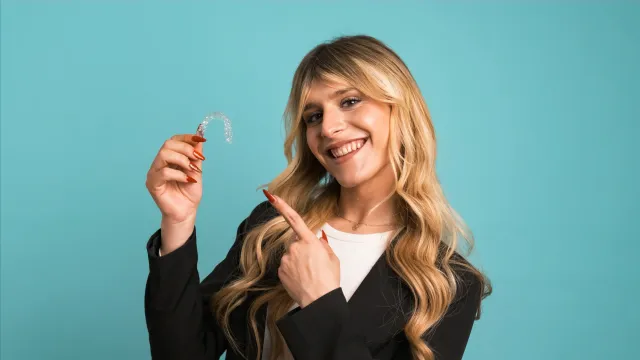
Clear aligner therapy uses a custom series of thin plastic trays to move teeth in small, planned increments. Each tray is worn for one to two weeks, then swapped for the next. You wear them 20 to 22 hours a day — only removing them to eat, drink anything other than water, and brush.
The technology has matured considerably in the last decade. Brands like Invisalign, Spark, and ClearCorrect now handle cases that used to require braces. If you want the head-to-head comparison, our post on clear aligners vs. braces breaks down when each one wins.
Before Month 1: The Consultation and Digital Scan
Nothing gets ordered until we know your case fits. A first visit for clear aligners at our Huntington Beach office runs about 45 minutes and covers three things:
- A clinical exam — teeth, gums, bite, and any restorations that affect treatment
- A digital 3D scan (no goopy impression trays)
- A treatment simulation showing your predicted month-by-month tooth movement
We also confirm you’re a fit. Active gum disease, untreated cavities, or a bite issue that aligners can’t reliably fix all get flagged here — not three months in when the plan stalls.
If everything checks out, your trays are custom-manufactured and arrive in about two to three weeks.
Month 1: Getting Started
Delivery day is roughly 45 minutes. We bond small tooth-colored composite “attachments” onto specific teeth — these give the aligners something to grip for precise movements. Then we walk through insertion, removal, cleaning, and the wear schedule.
The first 72 hours are the hardest of the entire treatment. Your teeth feel tight. Speech is slightly lispy. You’ll be constantly aware of the trays. By day four or five, all three of those things fade into background noise.
By the end of month one you’ve usually cycled through two or three tray sets. Most patients tell us the routine feels normal by week three. Compliance in this first month sets the tone for everything after — miss the 20-hour target now and you’ll spend the rest of treatment trying to catch up.
Months 2 to 3: Building the Routine
This is when the practical logistics of clear aligner therapy in Huntington Beach get real. Coffee runs, lunch meetings, kids’ birthday parties, beach days — all require planning. The rules that stick:
- Brush before you re-insert, every time
- Carry a small case (a napkin is not a case — we’ve heard the “aligner in the trash” story too many times)
- Water is the only thing that goes in your mouth with the trays in
- Sparkling water and lemon water still count as “not water” — the acid gets trapped against your enamel
You’ll come in for a quick check every 6 to 8 weeks so we can verify the trays are tracking correctly. If a tooth isn’t keeping up with the plan, catching it now is easy. Catching it at month eight is not.
By the end of month three, most patients see a visible difference in the mirror — small, but real. Front teeth that were rotated look straighter. Small gaps have closed. It’s the first real payoff of the commitment.
Months 4 to 6: The Middle Stretch
This is the slump. The novelty is gone. You’re not far enough along to see dramatic change, and you’re not close enough to the finish line to coast. Most compliance failures happen in this window.
Two things that help: comparing current photos to your day-one scan (the change is almost always bigger than it feels), and remembering that every skipped hour extends your total treatment. If your plan called for 40 trays and you’re wearing them 14 hours a day instead of 22, you’re not just slowing down — you’re going backward between sets, and the next tray won’t seat correctly.
Around month five or six, some patients need a small refinement scan. This isn’t a failure — it’s normal. Teeth don’t always move exactly the way software predicts, and we recalibrate with a fresh series of trays for the last stretch.
Months 7 to 10: Refinement and Final Movements
The last third of clear aligner therapy is where the small details get finished — the last few degrees of rotation, the final closure of a stubborn gap, the fine-tuning of how upper and lower teeth meet.
If refinement trays were ordered at month five or six, you’re wearing those now. If not, you’re on your original series and closing in on the last tray.
Toward the end, we polish off the composite attachments and take a final scan. If the finish looks right — bite functional, teeth aligned, gum line even — we move to retainers. If a specific movement needs another few weeks, we run a short refinement rather than declaring finished on a case that isn’t quite there. Getting the bite right matters more than hitting an arbitrary finish date.
After Treatment: Retainers Are Forever
The single biggest mistake orthodontic patients make is treating retainers as optional. Teeth naturally shift throughout your life, and the only reliable way to hold your new alignment is nightly retainer wear. The American Association of Orthodontists recommends indefinite retainer use for exactly this reason.
We provide clear retainers at the end of treatment and replace them as they wear out. Patients who show up to our Huntington Beach office 10 years later with the same aligned smile all have one thing in common: they wore their retainers.
Curious how aligner therapy stacks up against other options first? Our honest look at Invisalign covers the cases where it isn’t the right call.
Cost, Insurance, and Payment Options
At Peninsula Dentistry, clear aligner therapy runs $3,500 to $6,500. Simpler cases with a shorter tray series sit at the lower end; comprehensive full-arch cases with bite correction sit at the higher end. Cost is driven by case complexity, not by which brand is on the box.
Most PPO dental plans include an orthodontic benefit — usually a $1,500 to $2,500 lifetime maximum that applies equally to braces or aligners. We verify your specific benefits before you commit to treatment. Our insurance and payment page has the full breakdown, and we offer monthly payment plans that spread the balance across the treatment period.
The Cleveland Clinic’s overview of orthodontic appliances is a solid neutral resource if you want additional reading before your consultation.
Frequently Asked Questions
How long does clear aligner therapy in Huntington Beach usually take?
Most comprehensive cases finish in 12 to 18 months. Simple adult relapse cases can wrap in 6 to 10 months. Complex cases can run 24 months or longer. Compliance is the biggest variable — a patient wearing trays 22 hours a day finishes months faster than one averaging 14.
Will clear aligners hurt?
You’ll feel pressure and mild tightness for 24 to 48 hours after switching to a new tray. Most patients describe it as soreness, not pain. Over-the-counter pain relievers help. The tightness is the aligners doing their job.
Can I drink coffee with my aligners in?
No. Anything other than water — coffee, tea, soda, sparkling water, juice — will stain the trays and trap acid against your enamel. Remove the trays, drink, brush or rinse thoroughly, then re-insert.
What happens if I lose an aligner?
Call us. Depending on how far you are into the current tray, we’ll either have you move to the next set early or wear the previous set until a replacement arrives. Don’t skip ahead on your own — that’s how tracking problems start.
Are clear aligners right for teenagers?
Sometimes. Compliance is the deciding factor. A disciplined teen can succeed with aligners; a teen who forgets homework three nights a week will do better in braces. Our post on the best age for braces and orthodontic evaluation covers when to start the conversation.
Can I switch to braces if aligners aren’t working?
Yes. If we see that the plan isn’t tracking after a few months, we’ll have an honest conversation about switching approaches. It’s rare, but it happens — and catching it early is far better than pushing through a plan that won’t finish correctly.
Related Reading
- Clear Aligners vs. Braces: Which Is Right for You?
- Is Invisalign Right for You? An Honest Look at Clear Aligner Treatment
- What’s the Best Age to Get Braces? A Huntington Beach Guide
Thinking about starting clear aligner therapy in Huntington Beach? Schedule a complimentary consultation at Peninsula Dentistry. Call (714) 374-8800 or book online and we’ll walk you through your specific case, timeline, and cost before anything gets ordered.