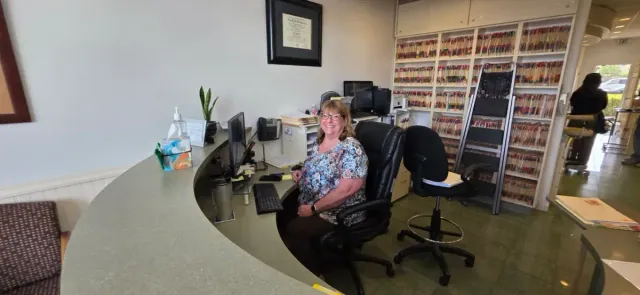

As a dad of three daughters, I’ve been on both sides of the first dental visit. I’m the dentist examining other people’s kids every day, but I was also the parent trying to get my own kids to open their mouths and cooperate. That experience shaped how I approach children at Peninsula Dentistry — because I know firsthand that a positive first visit can set the tone for a lifetime of good oral health, and a bad one can make every appointment after that a battle.
So whether your child is six months old with one tiny tooth poking through, or three years old and overdue for their first checkup, here’s everything you need to know.
When Should Your Child First See a Dentist?
The American Dental Association and the American Academy of Pediatric Dentistry agree: your child should see a dentist by their first birthday or within six months of their first tooth appearing, whichever comes first.
I know that sounds early. A lot of parents look at me like I’m kidding when I tell them this. “They only have two teeth — what are you going to do?” But that first visit isn’t really about finding cavities. It’s about three things:
- Establishing a baseline. We want to see how the teeth are coming in, check the jaw development, and look for anything unusual early.
- Catching problems before they start. Early childhood decay (baby bottle tooth decay) is more common than you’d think, and it can progress fast in baby teeth.
- Getting your child comfortable. A one-year-old who sits in a parent’s lap while I count their teeth with a gloved finger is going to be a lot more relaxed about the dentist than a three-year-old who’s never been and is suddenly confronted with unfamiliar instruments and a stranger looking in their mouth.
Most kids in Huntington Beach end up coming in around age 2-3, and that’s okay. But if you can get them in earlier, even better.
What Actually Happens During the First Visit
I want to demystify this because the unknown is what scares both parents and kids. Here’s exactly what happens at Peninsula Dentistry when we see a young child for the first time.
For Babies and Toddlers (Under 3)
The visit is intentionally brief and gentle. Your child sits on your lap — not alone in a big dental chair. I’ll do a “knee-to-knee” exam, which means you and I sit facing each other, your child sits on your lap facing you, and then we gently lay them back so their head rests on my lap. It looks a little funny, but it’s the best way to see inside a toddler’s mouth while they feel secure with a parent right there.
I’ll count teeth, check the gums, look at how the bite is developing, and check for any signs of early decay. The whole exam takes about 5-10 minutes. If there are enough teeth to brush, our hygienist will do a gentle cleaning with a soft brush. That’s it.
We also spend time talking with you — about diet (juice in sippy cups is the number one culprit for early decay), pacifier use, thumb-sucking, and how to brush those tiny teeth at home.
For Kids 3 and Up
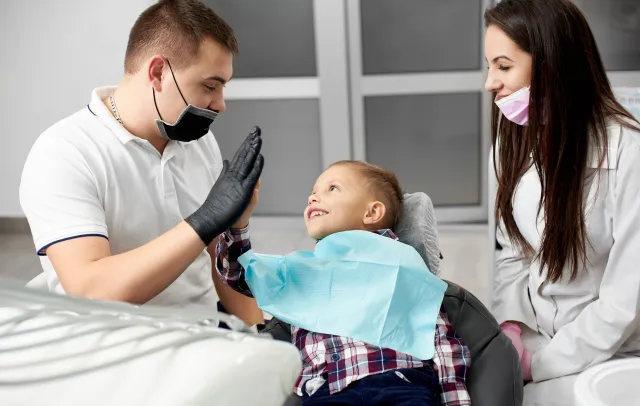
By this age, most kids can sit in the dental chair on their own, though a parent is always welcome to stay in the room. We do a more complete exam and cleaning:
- Teeth count and visual exam — checking for cavities, alignment issues, and developmental concerns
- Gentle cleaning — removing any plaque or tartar buildup
- Digital X-rays (usually starting around age 4-5, if the child is cooperative) — to see what’s happening below the surface and between teeth where we can’t visually inspect
- Fluoride treatment — a quick, flavored varnish that strengthens enamel and helps prevent cavities
- Oral hygiene coaching — showing your child (at their level) how to brush and why it matters
The whole visit takes about 30-45 minutes, and we keep it upbeat and conversational throughout.
How to Prepare Your Child (and Yourself)
Here’s where my parenting experience kicks in. The biggest mistake I see parents make — and I’ve been guilty of it too — is accidentally transferring your own dental anxiety to your child.
What to Do
Talk about it positively, but casually. “We’re going to see the tooth doctor tomorrow. He’s going to count your teeth!” Keep it simple and matter-of-fact. Kids pick up on the energy you bring.
Read a children’s book about going to the dentist. There are some great ones — “The Berenstain Bears Visit the Dentist” is a classic. It normalizes the experience.
Play dentist at home. Let your child “examine” a stuffed animal’s teeth, then you examine theirs. Make it a game. Count the teeth together.
Schedule smartly. Pick a time when your child is usually well-rested and fed. A tired, hungry toddler is not going to cooperate, no matter how good the dentist is. Morning appointments are usually best.
Don’t bribe with treats. “If you’re good at the dentist, you can have ice cream” creates pressure to “perform” and associates the dentist with something you need to be rewarded for enduring. Instead, just make it a normal part of the day.
What Not to Do
Don’t use the dentist as a threat. “If you don’t brush your teeth, the dentist will have to drill them” is the single fastest way to create dental phobia. I hear this from anxious adult patients all the time — someone scared them as a child, and they avoided the dentist for decades.
Don’t describe your own bad dental experiences. Your child doesn’t need to know about the root canal you had in college. Keep your anxieties out of their preparation.
Don’t say “it won’t hurt.” This actually puts the idea of pain in their head when it wasn’t there before. If they ask, say something like “the dentist is going to look at your teeth and make sure they’re healthy.”
Don’t force it if they melt down. If your toddler refuses to open their mouth and screams the entire time, that’s okay. It happens. We get what we can and try again in six months. Forcing a traumatic experience does more harm than a delayed exam.
Common Issues We Find in Kids’ Teeth
Most first visits go beautifully and we find healthy teeth. But here are the things we’re specifically watching for:
Early childhood caries (cavities). Baby teeth have thinner enamel than adult teeth, so cavities can develop faster and spread more quickly. The most common cause is prolonged exposure to sugary liquids — juice, milk, or formula in a bottle or sippy cup, especially at bedtime. If we catch decay early, we can often treat it with minimal intervention.
Thumb-sucking and pacifier habits. Sucking is natural and most kids outgrow it by age 3-4. If the habit continues beyond that, it can start affecting the alignment of the teeth and the development of the palate. We monitor and advise, but we don’t push parents to take the pacifier away prematurely — there’s a window where it naturally resolves.
Tongue-tie and lip-tie. Some children have a tight frenulum (the little band of tissue under the tongue or upper lip) that can affect feeding in infancy and speech development later. We screen for this during the exam.
Alignment and bite issues. Even with baby teeth, we can sometimes see early signs of crowding, crossbite, or open bite that may benefit from future orthodontic treatment. This is where early monitoring saves time and money down the road.
Fluoride and Sealants: Preventive Powerhouses
Two of the most effective tools we have for preventing cavities in kids are fluoride and dental sealants.
Fluoride strengthens enamel and makes teeth more resistant to acid attacks from bacteria. We apply a professional fluoride varnish at each cleaning visit — it takes about 30 seconds, tastes like bubblegum or strawberry, and provides months of added protection. For kids in areas with non-fluoridated water, fluoride supplements may also be recommended.
Sealants are thin, protective coatings applied to the chewing surfaces of the back molars, where most childhood cavities occur. Those deep grooves in molars trap food and bacteria that a toothbrush can’t always reach. Sealants fill in the grooves and create a smooth, easy-to-clean surface. They take just a few minutes per tooth, involve no drilling or discomfort, and can reduce cavity risk by up to 80% in the treated teeth.
We typically place sealants when the first permanent molars come in (around age 6) and again when the second molars arrive (around age 12).
When to Start Thinking About Orthodontics
I get this question a lot, and the answer might surprise you. The American Association of Orthodontists recommends that every child have an orthodontic evaluation by age 7.
That doesn’t mean your seven-year-old is getting braces. It means we’re looking at how the jaw is growing and how the permanent teeth are coming in. Some issues — like crossbites, severe crowding, or jaw discrepancies — are much easier to address while the jaw is still growing. Early intervention (Phase 1 orthodontics) can sometimes prevent more extensive treatment later.
At Peninsula Dentistry, we monitor your child’s growth and bite development during routine visits, then discuss orthodontic treatment when the timing is right. That continuity matters because orthodontic decisions should be based on the complete dental picture, not just snapshots.
For most kids, traditional braces or clear aligners start between ages 11-14, when most permanent teeth have come in. But having that age-7 evaluation gives us a head start on planning.
Building Lifelong Habits
The first dental visit isn’t just about what we find — it’s about what we start. Kids who have positive early dental experiences are more likely to maintain regular visits throughout their lives. A back-to-school dental checkup is an easy way to keep that routine consistent. And regular visits mean fewer cavities, healthier gums, and less dental anxiety.
Here are my top tips for building good oral habits at home:
- Start brushing as soon as the first tooth appears. Use a rice-grain-sized smear of fluoride toothpaste for kids under 3, pea-sized for ages 3-6.
- Parents should brush for kids until about age 6-7. Young children simply don’t have the manual dexterity to brush effectively on their own. Let them practice, but you do the real cleaning.
- Make brushing routine, not negotiable. It’s like a seatbelt — it just happens, every time.
- Floss when any two teeth touch. This is usually around age 2-3 for most kids.
- Limit juice and sugary snacks. Water and milk are the best beverages for teeth. If juice happens, keep it to mealtimes and dilute it.
- Lead by example. Brush your teeth with your kids. They imitate what they see.
I’ll be honest — raising three daughters, our house wasn’t always a model of perfect oral hygiene compliance. There were nights when brushing was a negotiation. But consistency wins over perfection. Just keep showing up, keep making it normal, and the habits stick.
Frequently Asked Questions
What’s the best age for a child’s first dental visit?
The ADA recommends by age 1 or within 6 months of the first tooth, whichever comes first. If your child is older and hasn’t been yet, don’t worry — schedule now. There’s no judgment, and getting started at any age is better than waiting.
How do I find a good kids’ dentist in Huntington Beach?
Look for a dentist who’s experienced with children and creates a welcoming environment. At Peninsula Dentistry, we see kids of all ages and take a gentle, patient approach. Many of our young patients are children and grandchildren of our long-time adult patients — that multigenerational trust says a lot.
What if my child is terrified of the dentist?
It’s more common than you think. We take it slow, let them explore at their own pace, and never force anything. Sometimes the first visit is just sitting in the chair and watching. Building trust takes time, and we’re happy to invest that time. A positive experience now prevents years of dental anxiety later.
Should I be in the room during my child’s dental appointment?
Absolutely, especially for the first visit. Your presence provides comfort and security. As kids get older (usually around age 5-6), some do better without a parent in the room — they tend to be more independent and cooperative. We’ll follow your child’s lead.
When should kids start brushing on their own?
Kids can start practicing around age 3-4, but parents should do the actual brushing until about age 6-7. A good rule of thumb: if your child can’t tie their own shoes, they don’t have the dexterity to brush their teeth effectively.
Are baby teeth really that important if they’re just going to fall out?
Yes. Baby teeth hold space for permanent teeth, help with speech development, and allow proper chewing and nutrition. Losing a baby tooth too early to decay can cause the surrounding teeth to shift, creating crowding and alignment problems when permanent teeth come in. Taking care of baby teeth protects the adult teeth underneath.
Related Reading
- What’s the Best Age to Get Braces? A Huntington Beach Orthodontist Explains
- How Often Should You Really Visit the Dentist?
Ready to schedule your child’s first dental visit? Peninsula Dentistry in Huntington Beach sees kids of all ages in a warm, family-friendly environment. Call (714) 374-8800 or book an appointment online. We’ll make it a great experience.